A payment ledger that refuses to guess.
Small traders in India run their business on WhatsApp but keep no ledger, so dues get forgotten and "I never promised that" disputes come down to memory. Sankhya+ reads the chat they already have and turns it into a record they can trust.
This walkthrough replays the project's test chat through the engine, one stage at a time. It contains all four trap cases the engine has to survive.
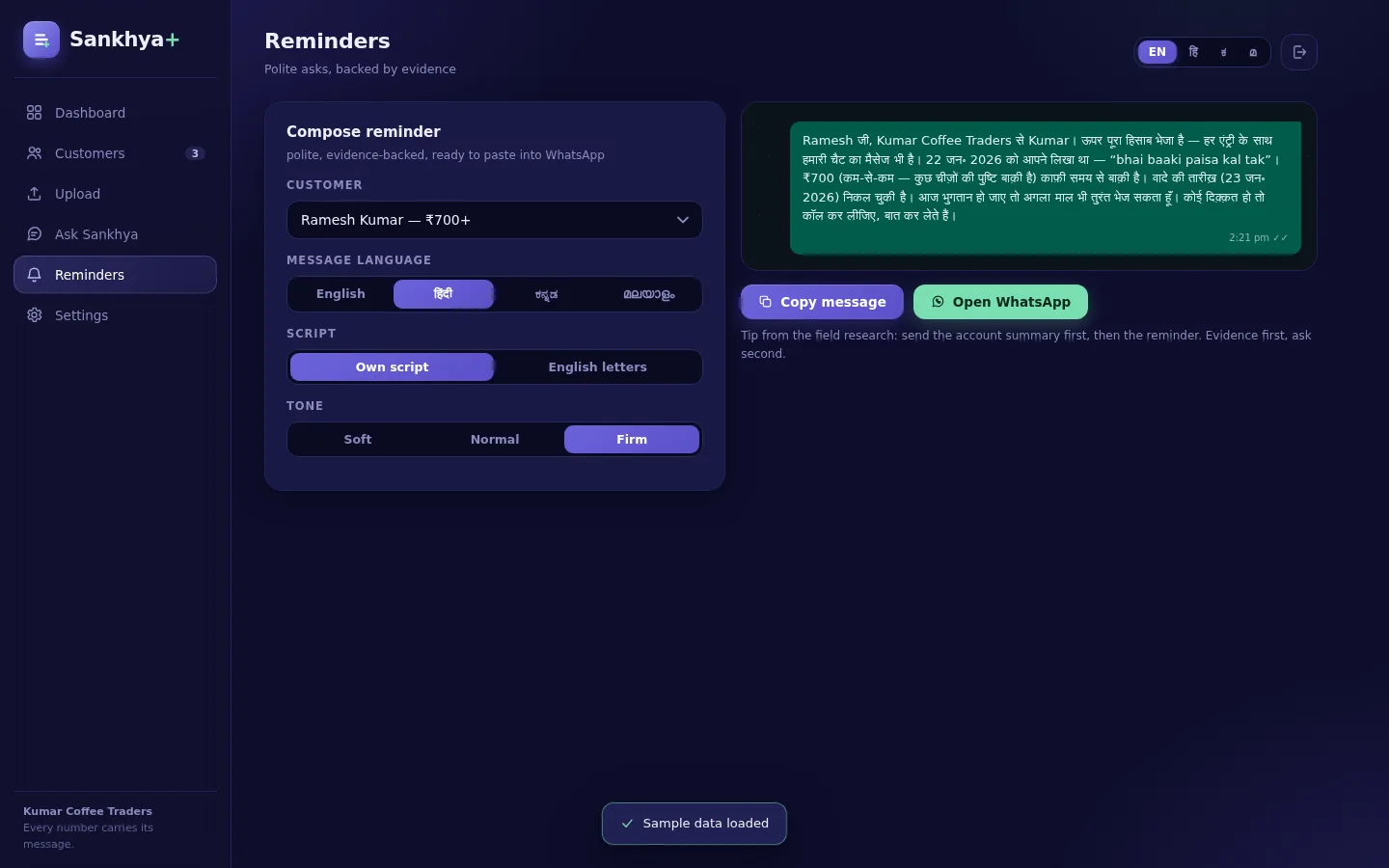
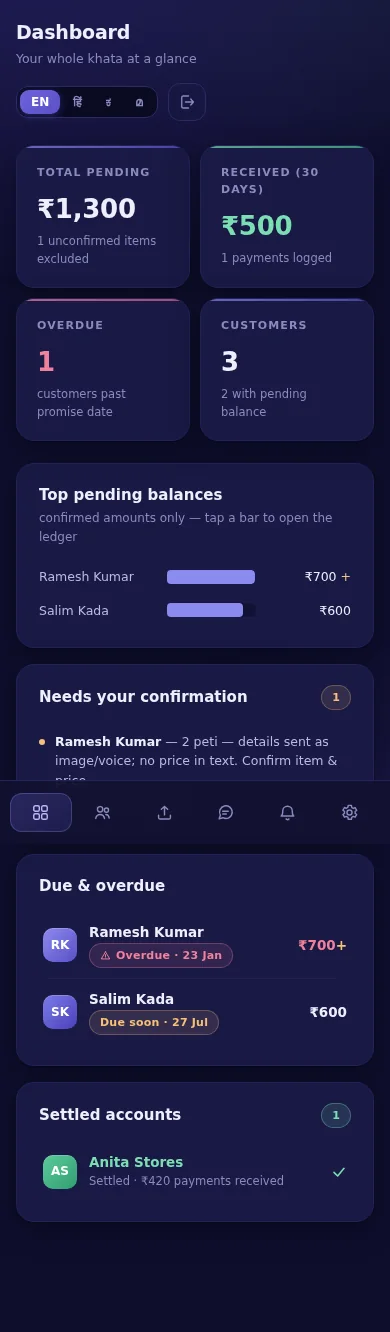
Real screens from the app
The walkthrough above shows the engine. These are the screens a shop owner uses, shown with the app's sample data.
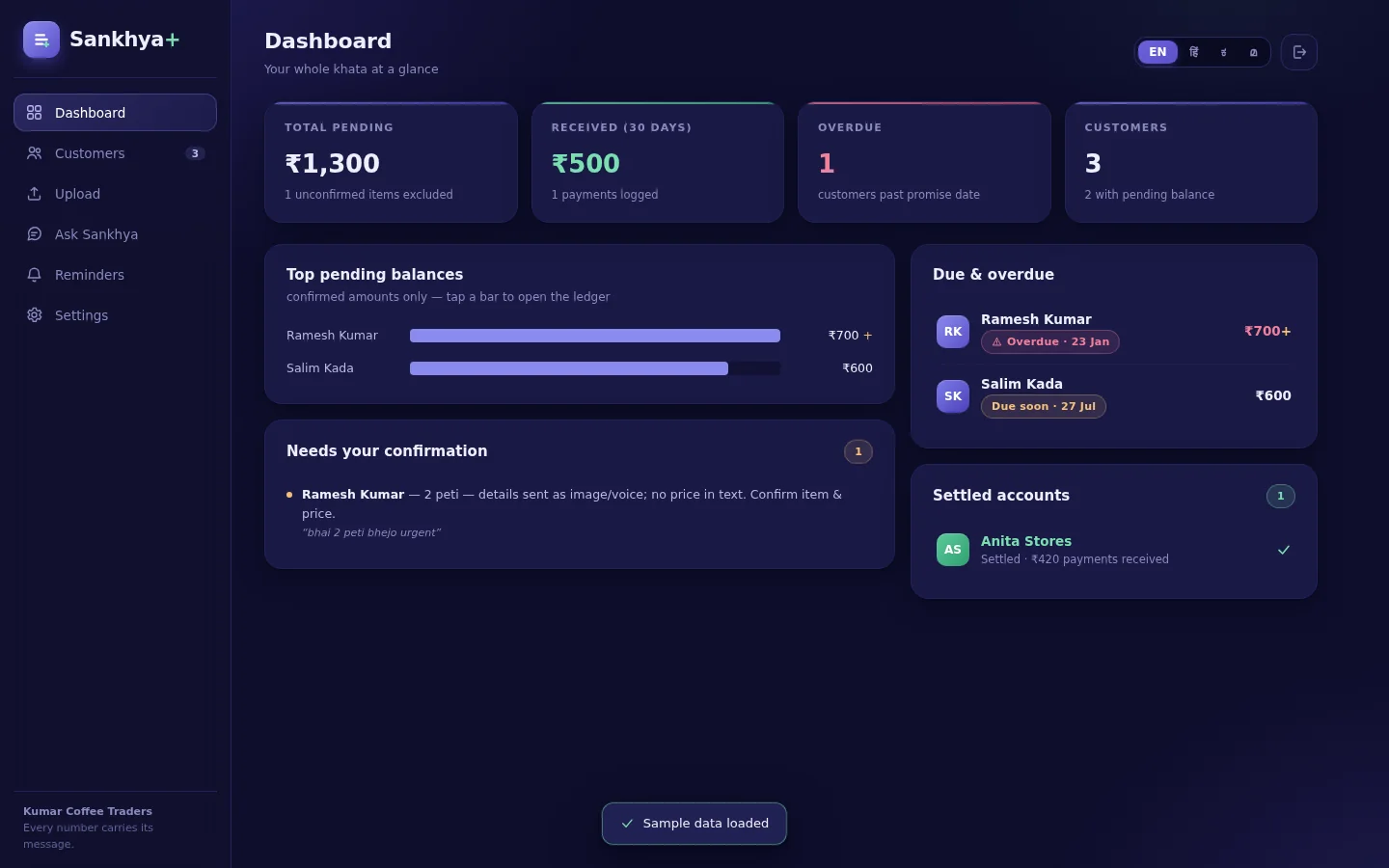
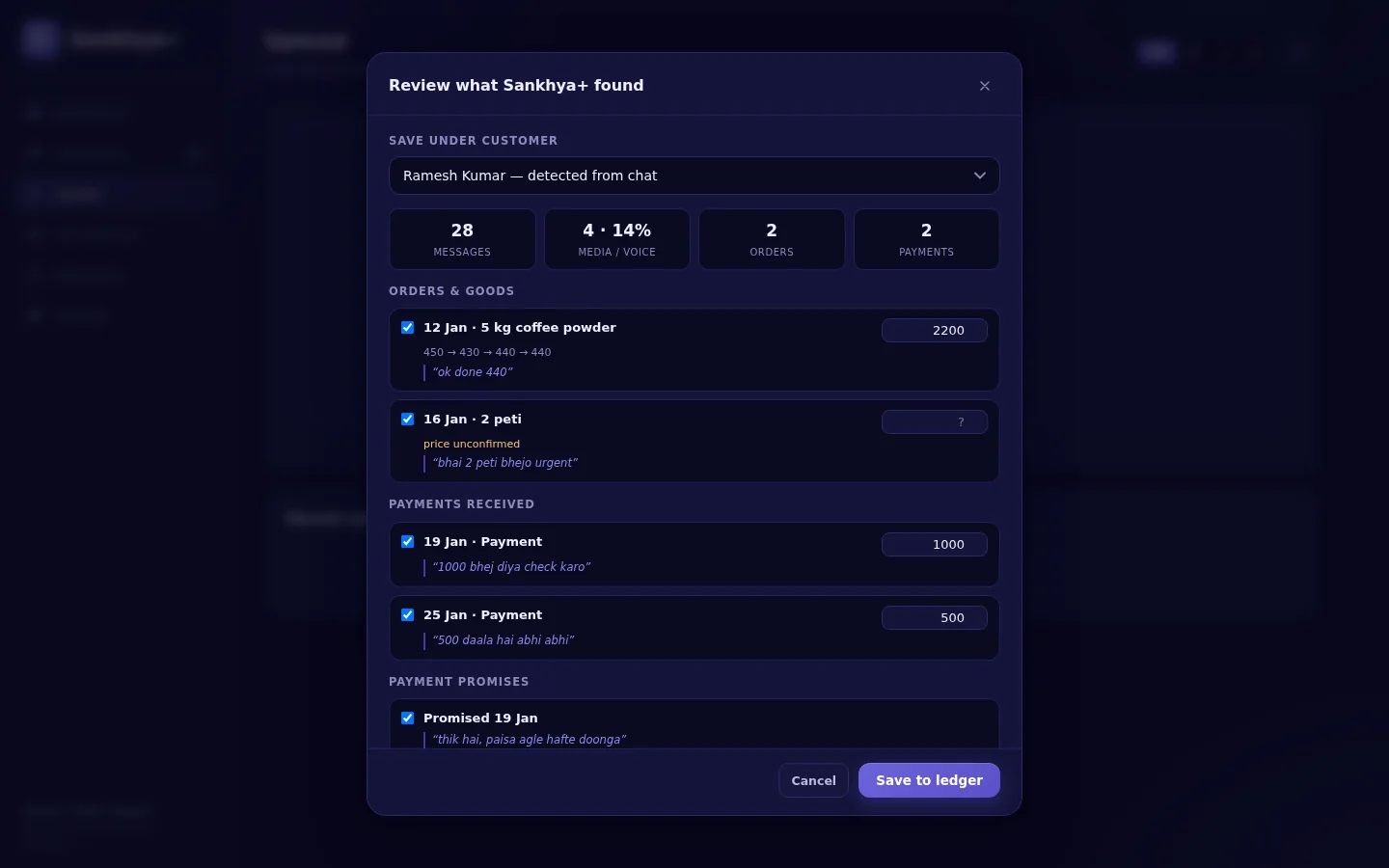
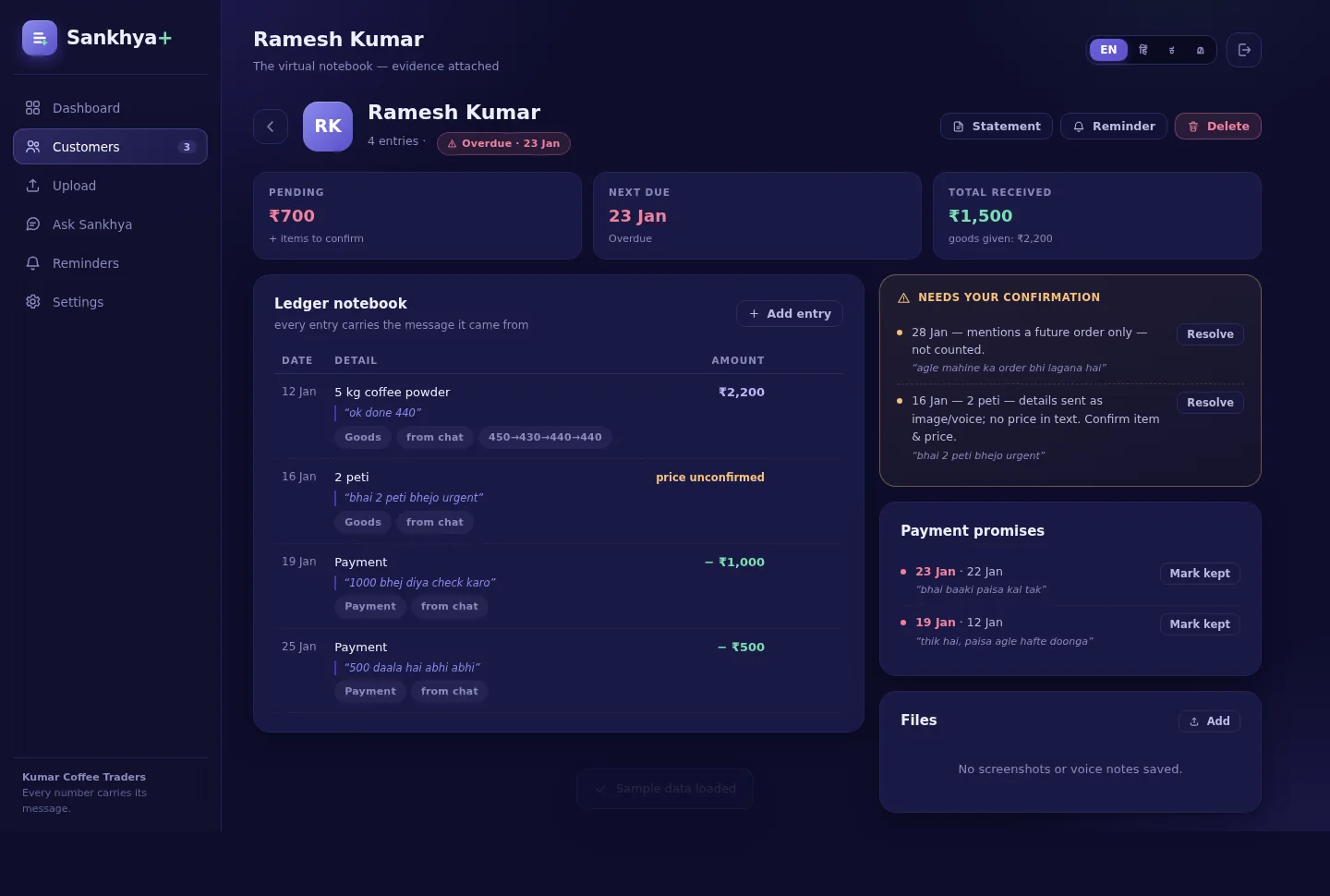
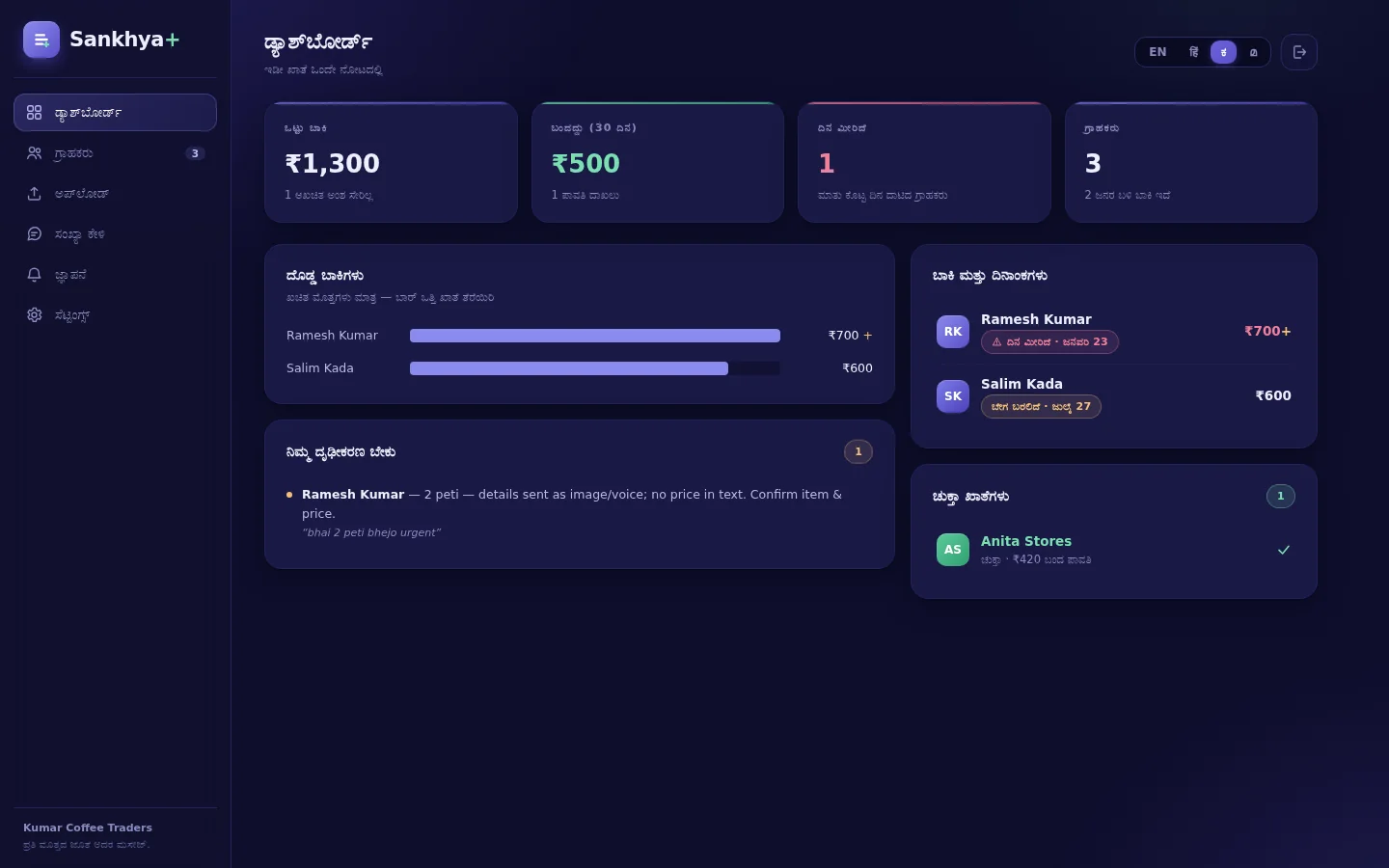
Tested against an answer key
Because the engine follows rules, it can be checked against a hand-made answer key. Every tricky case from the research runs automatically.
| Rule | What is checked | Result |
|---|---|---|
| A: price haggling | Uses the final 440 and ignores 450 and 430 | Pass |
| B: unpriced order | Flagged, never given an invented price | Pass |
| C: double payment | A payment and its confirmation count once | Pass |
| D: future order | Kept out of dues and noted separately | Pass |
| Evidence | Every entry carries its source message | Pass |
| Honesty | The balance is marked "not final" when an item has no price | Pass |
| Languages | Correct extraction in English, Hindi, Kannada, Malayalam and romanised typing | Pass |
| Formatting | Indian number grouping, such as ₹3,10,000 | Pass |
32 of 32 automated checks pass.
The product decisions
These were judgment calls about what the tool should and should not do, made before any code.
Never guess a number
If no price was agreed, the order is flagged and shown to the owner. A confidently wrong amount starts a fight with a real customer, so it's worse than no answer.
Evidence with every entry
Every order, payment and promise keeps the message it came from. When a customer disputes, the trader has the receipt.
Offline, in one file
No server, no cloud login, and no data leaving the phone. It runs from a single file on a cheap phone with poor internet.
Speak the trader's language
The interface and reminders work in English, Hindi, Kannada and Malayalam, including romanised typing the way people really chat.
Why rules, not a chatbot
A rules engine is predictable, runs fully offline, keeps the trader's data private, and can always show why it made a decision. For money, that transparency matters more than cleverness.
My role
I found the problem, hand-extracted real chats to learn the rules, made the product calls, defined the four traps and wrote the answer key. AI wrote the engine and interface code to my specification, and I checked its output against the key.